Bamboo Palm Care Guide | easyplant UK

About Bamboo Palm
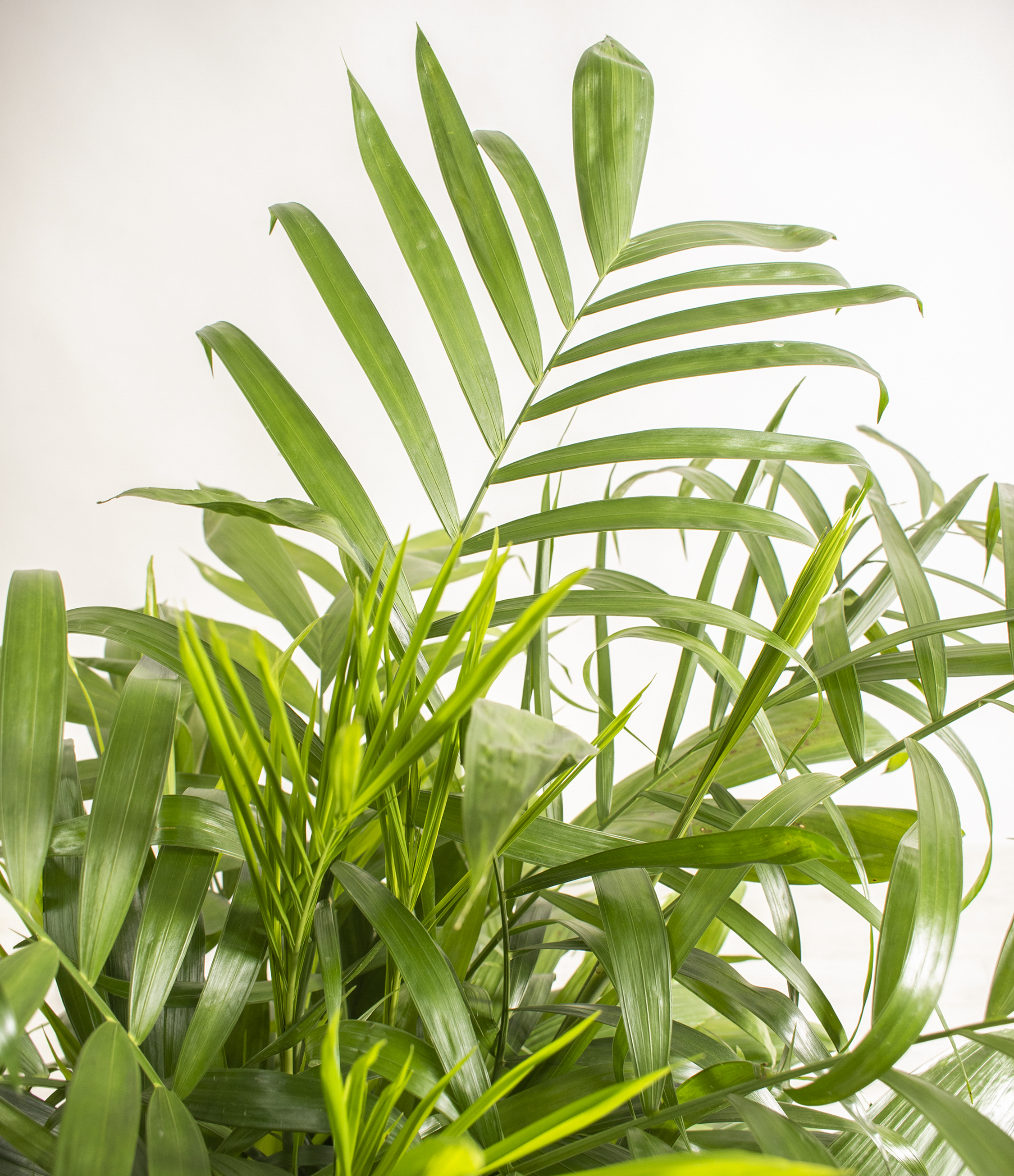
Bamboo Palm brings the jungle indoors with a splash of rich green and a sweet spot of shade, growing clusters of tall, slender trunks resembling the beloved bamboo. Due to this resemblance, several palm species fall under the umbrella term ״bamboo palm״. Native to the tropical forests of the Yucatán Peninsula of Mexico and parts of South America, it lives naturally in the shade of large trees. This palm is well suited to indoor life and thrives as a lush houseplant.
Other common names
- Reed Palm
- Clustered Parlor Palm
- Cane Palm
- Chamaedorea Seifrizii
How Often Should I Water My Bamboo Palm?
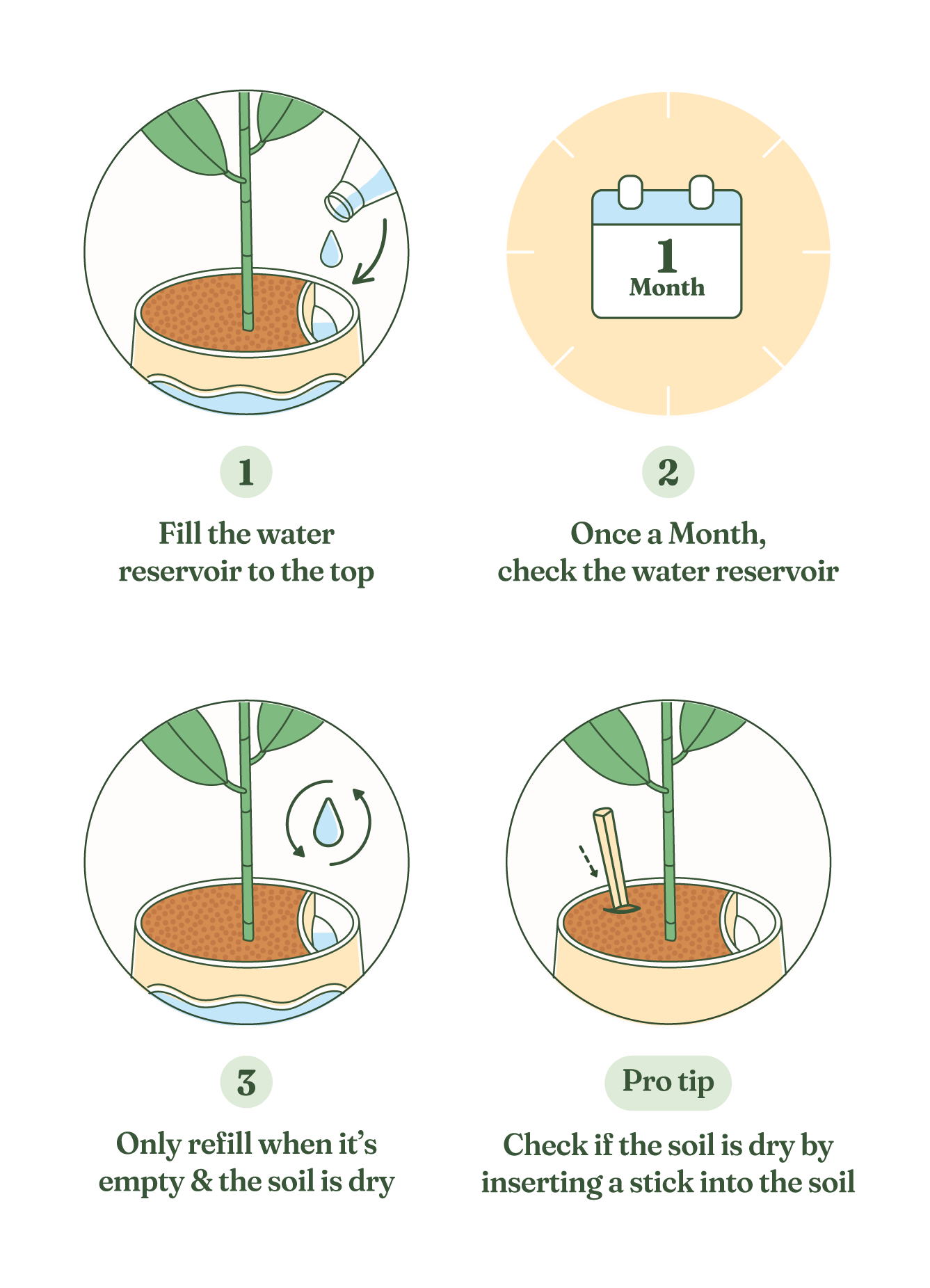
Although the Bamboo Palm is native to tropical climates and thrives in swampy landscapes, it can also adapt to drier conditions. Its highly adaptable nature allows it to grow well indoors, and it is even known to be relatively drought tolerant. With easyplant, watering your Bamboo Palm is simple. Make sure to check the easyplant reservoir once a month and fill it when empty, and you are all set.

Bamboo Palm Light Needs
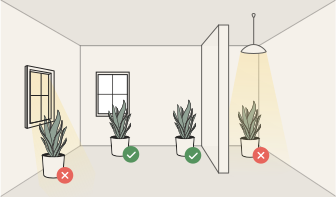
Bamboo Palm grows best in a space with bright indirect light, where the sun’s rays are diffused, and can also adapt to spaces with medium to low light. Avoid placing it in areas without natural light or in direct sunlight.

Bamboo Palm Plant Care
During its first few days at home, your Bamboo Palm may lose several leaves or some leaves may turn yellow. There is no reason for concern. Simply remove or trim the leaf and allow new, better-adjusted leaves to grow in its place. To help it grow evenly and stay healthy, occasionally dust the leaves and rotate the pot by a quarter turn once a month. To maintain its shape and height, you may prune it periodically to your liking. Bamboo Palms should be fertilised three times a year during spring, summer, and autumn.
How Big Do Bamboo Palm Plants Grow?
One of the advantages of the Bamboo Palm is that the plant is highly adaptable. Though it grows slowly and steadily, it will not overcrowd a space or compete with other plants growing nearby. Bamboo Palms can be planted next to one another or alongside other trees, as they spread gently through their root systems. With proper care, a Chamaedorea seifrizii can reach 1.2 to 3 metres (4 to 10 feet) tall and 90 cm to 1.5 metres (3 to 5 feet) wide.
Once the palm reaches maturity, usually between two and five years, it produces small flowers that develop into pea-sized fruits that turn black when ripe.
Temperature & Humidity
Bamboo Palm prefers consistent moisture and should not be allowed to dry out completely. As a houseplant, avoid placing it near air conditioning units or heating vents. If the air in your home is dry, you can help increase humidity by placing a deep saucer filled with rocks and water beneath or near the plant. This helps provide humidity without saturating the roots. Bamboo Palms can tolerate temperatures as low as 35°F, but frost and very cold conditions should be avoided. The ideal temperature range for this plant is between 65 and 80°F.
Are Bamboo Palms Toxic for Pets & Kids?
Some plants look beautiful in the home but may be unsafe for children or pets. When choosing a houseplant, it is important to know whether it may be toxic if touched or ingested. Bamboo Palm is non-toxic and safe for both humans and animals. However, the small fruits it produces are not edible and may cause an allergic reaction if ingested.
Troubleshooting Common Problems with Bamboo Palm
If you notice the leaves becoming brown or crispy, move the plant to a location with less direct light. If the leaves begin turning yellow, try placing the plant in a brighter spot with more indirect light.
Frequently Asked Questions about Florida Bamboo Palm Plant
- How Fast Do Bamboo Palms Grow?

Bamboo Palm grows at a slower rate, taking two to five years to reach full maturity. One of the markers of maturity is beautiful Bamboo Palm flowers that occur during the summer months and are yellow in color. After the flower, small red berries appear that turn black when fully ripened.
- Do Bamboo Palms Spread?
In terms of their roots, the Bamboo Palm has shallow roots that are not invasive, so you can plant other bamboo palms or trees relatively close to one another. In terms of propagation, this plant does so through its seeds, which take around 6+ months to germinate.
- Is Bamboo Palm Easy to Care for?If you see bugs on the Bamboo Palm, they are likely spider mites which tend to occur in a dry area. If you have these pests, use a soapy mixture twice a day. If that doesn't work, try a professional pest remover. Bamboo Palm diseases to look out for are scale, rot, or mealy bug.
 Small Plants
 Medium Plants
 Plants Collections
 Large Plants
 Huge Plants