


African Milk Tree at a Glance

African Milk Tree Bio
Light Instructions
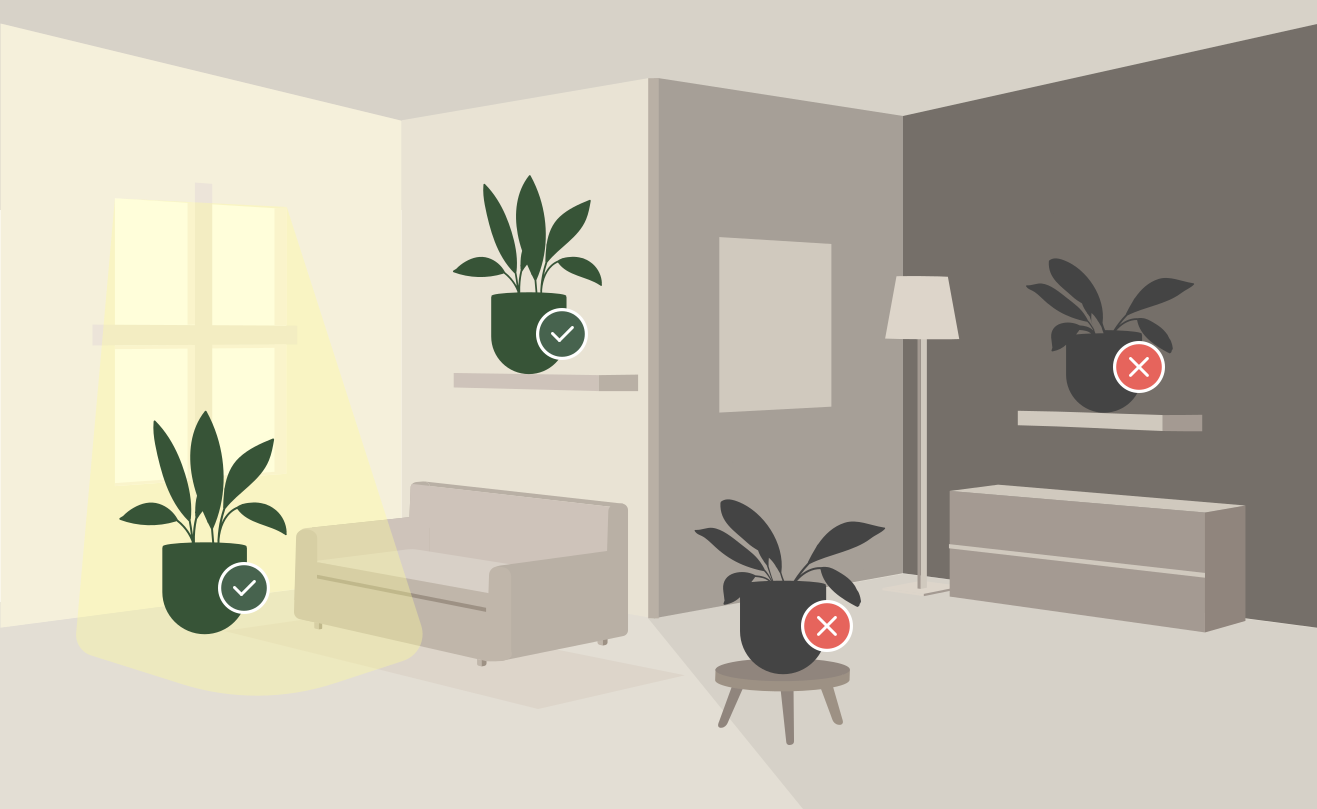
African Milk Tree grows best in a space with bright direct light, where the sunlight streams inside directly, and can also adapt to spaces with bright indirect light, where the sun rays are diffused. Avoid placing it in spaces with low light or spaces without natural sunlight.
How does self-watering work?
- 1Simply open the lid and fill with water
- 2Your plant drinks only when needed
- 3The result: healthy, long-lived plants that are easy to maintain

easyplant benefits
- Carefree and convenient
- Never worry about when to water
- Much healthier plants that live longer
- We use proven Waterwick TM technology to optimize water consumption
| Advantages |  | Other |
|---|---|---|
| Water every | 3 Months | 3 Weeks |
| Overwatering | Rare | Common |
| Underwatering | Never | Common |
| Over compacted dry soil | Never | Common |
| Easily know when to water |  |  |
| Stable root growth | | |
To keep your African Milk Tree looking its best, gently wipe its tall stems with a soft, dry cloth to remove dust and allow it to breathe and absorb light more efficiently. Rotate the plant every few weeks so it grows evenly and doesn’t lean toward the light source. If any stems become too tall or unruly, you can carefully prune them back - always wearing gloves, as the plant’s sap can be irritating. Trimmings will not regrow from the cut point, but new branches may form lower on the stem. Over time, your African Milk Tree may outgrow its pot, and when that happens, you can repot it using easyplant’s repotting kit, which provides a larger pot with fresh soil to support continued growth.
How often should I refill the self-watering planter for my succulent?
Only once every 3 months! Our self-watering system ensures your succulent gets the exact amount of water it needs.
Why don't easyplant pots have drainage holes?
Our innovative self-watering design maintains optimal soil moisture without drainage holes, ensuring healthy roots and a clean, mess-free experience.
 small
small medium
 large
large huge
huge collections